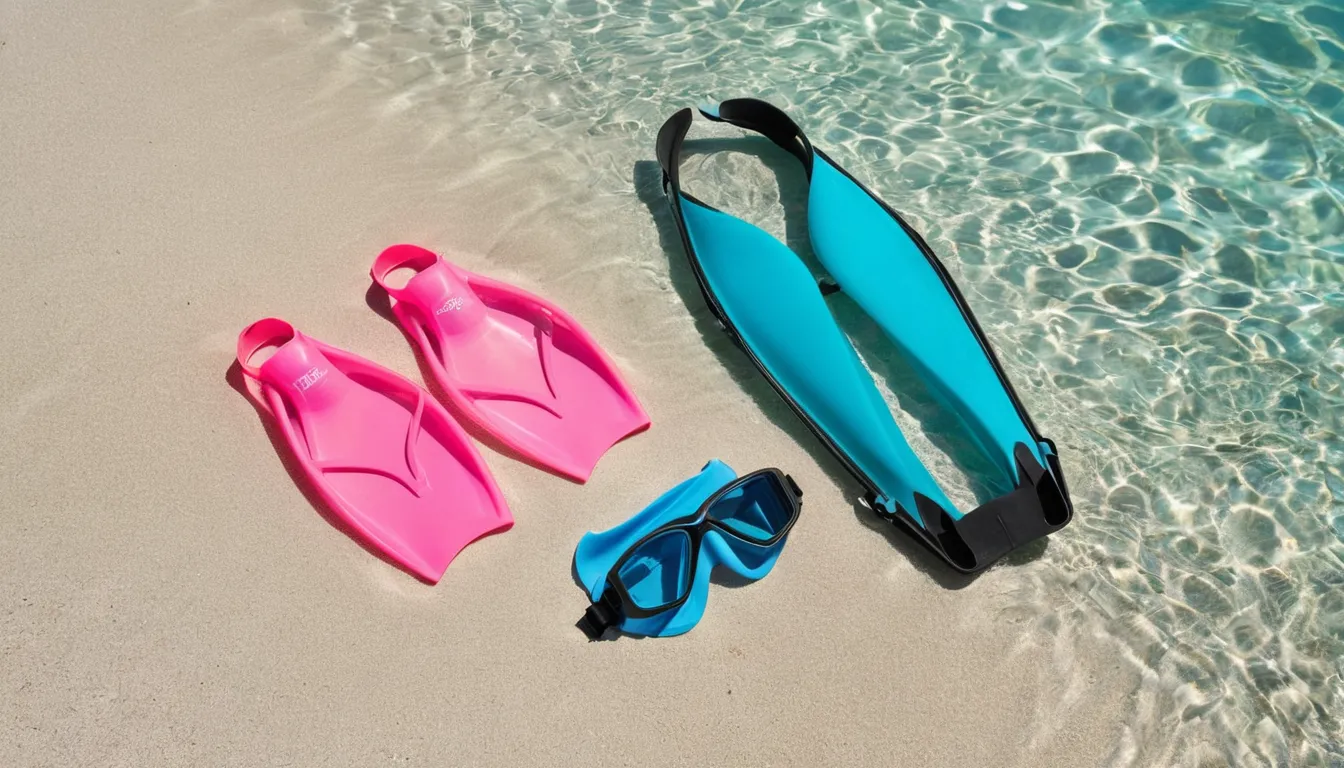
The basic kit
You can snorkel with a mask, a snorkel and a pair of fins. Everything else adds comfort or safety. The table sums up what each item does and what to look for when you buy or rent.
| Item | What it does | What to look for |
|---|---|---|
| Mask | Puts an air space in front of your eyes so you can see clearly, and covers your nose so water stays out. | Fit matters most. Try the suction test before you buy or rent. |
| Snorkel | A tube that lets you breathe with your face in the water. | A simple tube with a soft mouthpiece is enough. Valves and dry tops are optional extras. |
| Fins | Turn a gentle kick into steady movement, which saves energy and helps in a current. | Full-foot fins suit warm water. Open-heel fins with boots help on rocky entries. |
| Snorkel vest | A vest you inflate by mouth for extra float when you want to rest. | Useful for new or tired swimmers, and some tour boats require them. |
| Rash guard or skin | A thin long-sleeved top or suit that blocks sun and light stings. | Cuts down how much sunscreen you need on your back. |
| Water shoes | Protect feet on rock, rubble and urchin-studded shores. | Wear them for walking in, then switch to fins in the water. |
Choosing a mask
A good mask is the one that fits your face. Brand and price matter far less. Look for a soft silicone skirt that sits flat on your skin, tempered glass lenses and a strap that is easy to adjust. A smaller air space inside the mask is easier to clear if water gets in.
The suction test
- Push your hair back off your forehead. Stray hair under the skirt breaks the seal.
- Hold the mask against your face without using the strap.
- Breathe in gently through your nose and let go.
- If the mask stays in place on its own, it fits. If it falls or you hear air leaking, try another.
A mustache often lets a little water in. A thin layer of a water-based balm on the hair above your lip can help.
Stopping a mask from fogging
New masks often carry a thin film from the factory that causes fog. Many snorkelers clean the inside of a new glass lens with a little plain toothpaste and rinse it well, but check the maker's instructions first, since this can scratch plastic or coated lenses. Before each swim, rub in a drop of defog solution or diluted baby shampoo, then rinse lightly. Avoid spitting into a mask that others will share.
Choosing a snorkel
A plain J-shaped tube with a comfortable mouthpiece works well. Some snorkels add a purge valve at the bottom, which makes clearing water easier, or a float valve at the top that closes when a wave washes over. These help some people and annoy others. Try a simple one first.
Full-face snorkel masks are popular because they feel natural to breathe in. Some safety groups have raised questions about breathing resistance and carbon dioxide buildup in some designs. If you use one, make sure it fits, test it in shallow water and stop at once if you feel short of breath or lightheaded.
Choosing fins
Fins let you move with slow, easy kicks, which saves energy and makes it easier to swim back against a light current. Full-foot fins slip on like shoes and suit warm water. Open-heel fins use an adjustable strap and are worn with neoprene boots, which also protect your feet on rocky entries. Fins should feel snug without pinching. Shorter, softer blades are easier on the legs for beginners.
Useful extras
- Snorkel vest. An inflatable vest gives you a place to rest at the surface. Add only as much air as you need.
- Rash guard or thin suit. It blocks sun on your back, which is the part that burns most while you float face down.
- Water shoes. They protect your feet on rock and sea urchins when you walk in.
- Dry bag. Keeps keys, phone and medicine dry on the beach or a boat.
Gear care
Rinse everything in fresh water after each swim, dry it out of direct sun and store the mask in its box so the lens does not scratch. Check straps and mouthpieces before each trip, since sun and salt make rubber crack. Rented gear should look clean and intact; ask for another set if it doesn't.