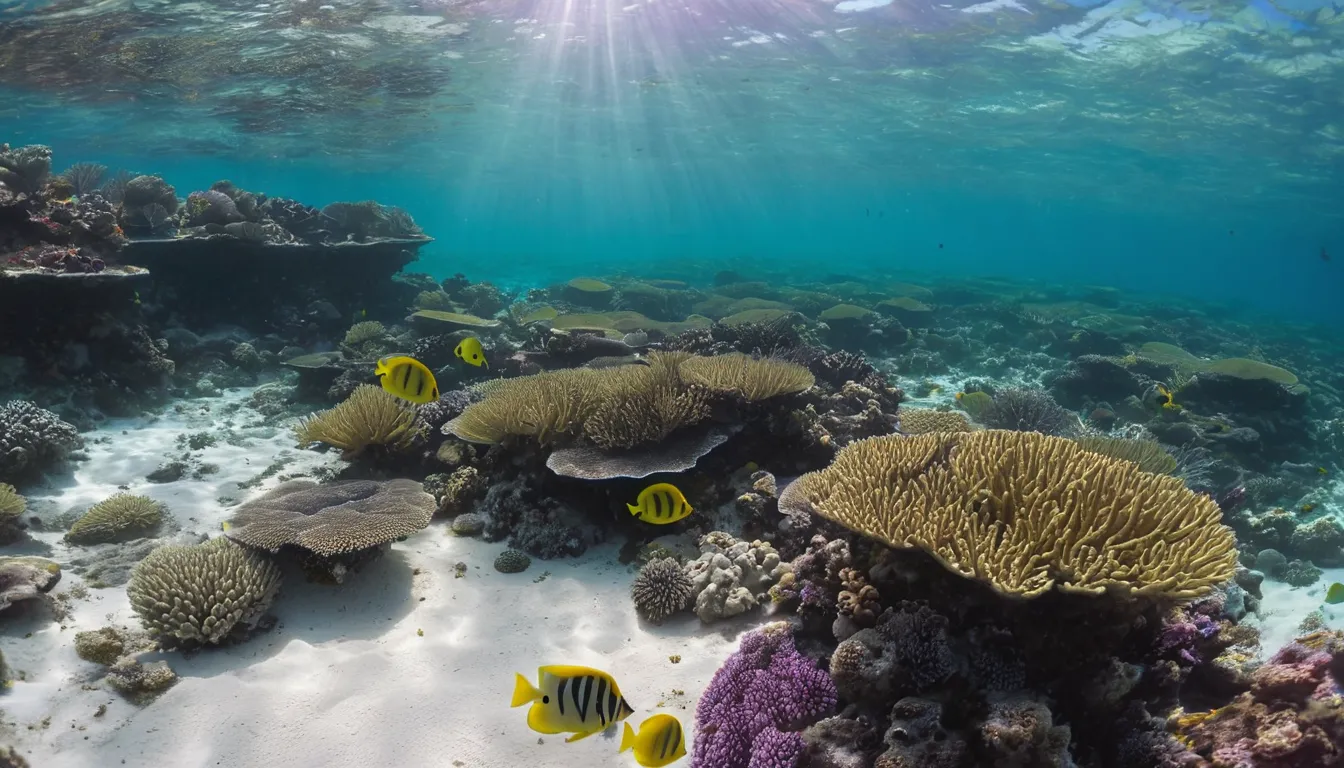
Where each one lives
Most reef animals stick to certain parts of the reef. The lettered markers show where you are most likely to find each one, and the numbers match the zones explained in how a reef is laid out.
Swipe sideways to see the whole reef.
- Beach and shallows0 to 1.5 m (0 to 5 ft)
- Seagrass beds1.5 to 3 m (5 to 10 ft)
- Lagoon and patch reefs2 to 4 m (6 to 13 ft)
- Back reef and reef flat0.5 to 1.5 m (2 to 5 ft)
- Reef crestUnder 1 m (3 ft)
- Fore reef2 to 15 m (6 to 50 ft)
- Drop-off15 m (50 ft) and deeper
- ASouthern stingray
- BGreen sea turtle
- CQueen conch
- DParrotfish
- ESergeant major
- FTrumpetfish
- GBlue tang
- HElkhorn coral
- IFrench angelfish
- JGreat barracuda
- KLionfish
- LSpotted eagle ray
Not to scale. The depth scale is stretched near the surface so the shallow zones show clearly. Depths are typical and rounded; every reef has its own shape, and tides change the shallow parts.
Field cards
ARayZone 2: Seagrass beds
Southern stingray
Look for: A flat, diamond-shaped outline in sand patches, often half buried with only the eyes showing.
When wading, shuffle your feet so a resting ray feels you coming and moves off.
BReptileZone 2: Seagrass beds
Green sea turtle
Look for: A large shell over the seagrass, head down while it grazes, rising slowly to breathe.
Sea turtles are protected across the region. Give them room and never block their way to the surface.
CMolluskZone 2: Seagrass beds
Queen conch
Look for: A heavy spiral shell with a flared pink lip, moving slowly across sand and grass.
Many places limit or ban taking conch. Leave every live shell where it is.
DFishZone 3: Lagoon and patch reefs
Parrotfish
Look for: Blue, green and pink fish with a beak-like mouth, scraping algae off rock and dead coral.
You can often hear them crunching. Much of the white sand on reef beaches passed through a parrotfish.
EFishZone 3: Lagoon and patch reefs
Sergeant major
Look for: Small yellow and silver fish with five black stripes, often in loose groups near the surface.
Males guard patches of purple eggs on rock and may dart at a mask that comes too close.
FFishZone 3: Lagoon and patch reefs
Trumpetfish
Look for: A long, thin fish hanging head down beside a sea fan or a branching coral.
It hides by lining up with plants and other fish, so look twice at anything stick-shaped.
GFishZone 4: Back reef and reef flat
Blue tang
Look for: Oval, bright blue fish grazing in groups. Young ones are yellow.
Like other surgeonfish, it has a sharp spine near the tail. Admire it from a distance.
HCoralZone 5: Reef crest
Elkhorn coral
Look for: Thick, flattened branches like a moose antler, in the shallow, wave-washed part of the reef.
It has declined sharply since the 1980s and is listed as threatened under US law. Never touch or stand near it.
IFishZone 6: Fore reef
French angelfish
Look for: A tall, dark fish with yellow edges on each scale, often swimming in pairs.
Angelfish are often curious and may approach. Hold still and let them come.
JFishZone 6: Fore reef
Great barracuda
Look for: A long, silver fish hanging still just below the surface, sometimes following swimmers.
Its stare looks fierce, but problems with people are very rare. Calmly swim on.
KFishZone 6: Fore reef
Lionfish
Look for: Red and white stripes with long, fanned spines, resting under ledges by day.
It is not native to the Caribbean, and its spines are venomous. Look but keep your hands away.
LRayZone 7: Drop-off
Spotted eagle ray
Look for: A dark ray covered in white spots, flying along the reef edge on wide wings.
It is usually shy. You will see more if you stay calm and do not chase.
Tips for spotting more
- Slow down. Hover in one place for a minute or two. Fish that fled when you arrived often come back.
- Look at edges. Where sand meets coral or grass, animals hunt, hide and graze.
- Check crevices and ledges. Moray eels, lobsters and lionfish rest in shade by day.
- Watch the sand. Rays, flatfish and conch can look like part of the bottom.
- Look up and out. Barracuda, jacks and eagle rays often cruise in open water near the reef edge.
Animals to give extra room
Very few reef animals are dangerous if you leave them alone. Fire coral stings, sea urchin spines break off in skin, lionfish spines are venomous, and surgeonfish have sharp tail spines. Moray eels open and close their mouths to breathe, which looks like a threat but isn't; still, never reach into a hole. Keep your hands to yourself and these risks become very small. The reef-safe habits page explains how to watch without disturbing anything.
A note on names
We use common English names. Local names vary from island to island, and the same fish can have several. A regional fish identification book or app helps if you want to learn more species and their scientific names.